In recent years, Punjab has stood at the crossroads of economic growth and environmental degradation. Urban expansion, unchecked industrial emissions, vehicular pollution, and agricultural burning have combined to create an ecological crisis that manifests most acutely in the thick smog that blankets cities each winter. Aware of the urgency of the situation, Chief Minister Maryam Nawaz has made environmental protection and climate resilience central pillars of her governance vision. Led by Senior Minister Marriyam Aurangzeb, her administration has rolled out a range of forward-looking, technology-driven, and community-oriented initiatives to reduce pollution, safeguard public health, and build a sustainable future for Pakistan.
A multi-pronged attack on smog
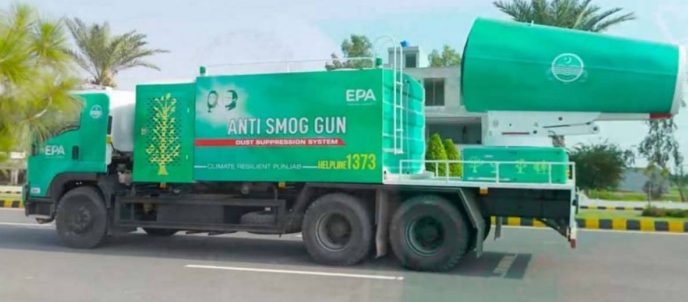
Punjab’s most pressing environmental challenge has long been winter smog, which poses serious threats to public health and economic activity. In response, the government has implemented a comprehensive anti-smog strategy. Smog guns have been installed at key locations to suppress airborne particulate matter, while monitoring units provide real-time air quality data to enable swift and targeted action by relevant departments. A bold step has been the conversion of petrol-powered motorcycles to electric bikes. Since motorcycles are a major source of urban emissions, promoting electric mobility through incentives and infrastructure development is expected to bring significant reductions in pollution. Alongside this, the Environment Protection Authority (EPA) has been strengthened with expanded administrative and technological powers to enforce environmental regulations more effectively.
Chief Minister Maryam Nawaz has made environmental protection and climate resilience central pillars of her governance vision.
A landmark initiative in this regard is the establishment of Pakistan’s first SMART Environment Protection Force, launched by Chief Minister Maryam Nawaz on 21 April 2025. Described by her as a “milestone in Punjab’s journey toward environmental improvement,” this force uses drones, mobile laboratories, and real-time AQI monitors to detect and address violations proactively, marking a decisive shift from reactive to preventive environmental governance.
Complementing these measures, the Chief Minister’s campaign against crop residue burning has evolved into a province-wide movement, warmly supported by farmers. The introduction of modern machinery, such as super seeders, bailers, and harvesters, has significantly improved smog conditions, with over 316,000 acres cleared using 91 bailers and 814 Kubota harvesters. Many farmers have now shifted from burning stubble to collecting it for livestock feed, a transformation CM Maryam Nawaz hailed as a major step toward a cleaner, greener Punjab.
Punjab Green Development Programme
Punjab’s eco-friendly vision builds on a strong foundation laid by the Punjab Green Development Programme (PGDP), which was launched during the Buzdar government with significant financial and technical support from the World Bank. Despite its critical importance, the $ 273 million programme was largely neglected by the Buzdar administration, and its various schemes could not be implemented. After the resignation of the PTI government in 2023, the caretaker government reinvigorated the programme by appointing a competent project director, who immediately started work on stalled schemes, which are now coming to fruition. The programme seeks to integrate environmental sustainability into Punjab’s development planning by improving air and water quality, modernising regulatory frameworks, and supporting green investments.
Under Maryam Nawaz’s leadership, the PGDP has gained renewed momentum and a broader scope. The World Bank’s partnership has provided both resources and global expertise, enabling Punjab to scale interventions, strengthen institutions, and align environmental governance with international best practices.
Green electric buses: a clean transport revolution
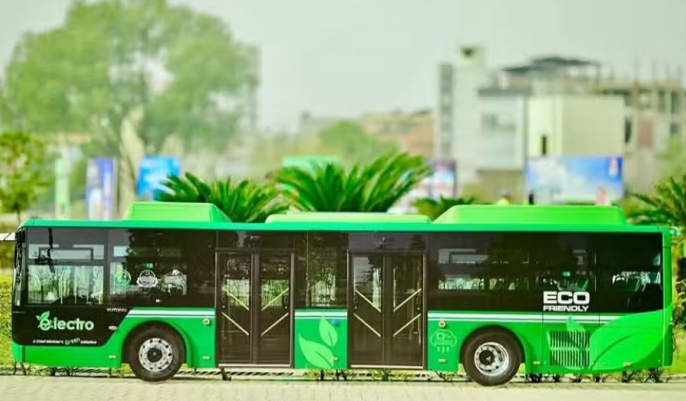
The Green Electric Buses Project marks a major step toward reducing smoke and protecting the environment. Eco-friendly electric buses have been introduced to provide clean, modern, and sustainable public transport. Green buses have been launched across several major cities in Punjab, including Lahore, Faisalabad, Gujranwala, Sargodha, Khushab, Mianwali, and Bhakkar, where more than 500 electric buses are already operating under the first phase. The initiative, which envisions a total of 1,500 eco-friendly buses, is set to expand further to Sheikhupura, Sialkot, Gujrat, Rahim Yar Khan, and Dera Ghazi Khan. This ambitious project marks a major step toward cleaner urban transport and reduced carbon emissions across the province.
Digital innovations and citizen engagement
The current administration has embraced digital technology to strengthen citizen participation in environmental governance. A pioneering example is the launch of Pakistan’s first “EcoBot,” an AI-powered assistant that provides real-time Air Quality Index (AQI) data for major cities such as Lahore, Faisalabad, Rawalpindi, and Multan. Beyond offering information, EcoBot guides citizens on protective measures against air pollution, promoting responsible behaviour and fostering a sense of shared responsibility between the government and the public.
More than 500 electric buses are already operating under the first phase, marking a major step toward cleaner urban transport and reduced carbon emissions.
Complementing this initiative, Chief Minister Maryam Nawaz has also inaugurated Punjab’s first “Environment WhatsApp Chat Box,” which enables citizens to directly access information on health services, environmental conditions, and cleanliness through the number 0304-1373000. This two-way communication platform allows people to register concerns and receive timely updates, while local administrations, already equipped with modern machinery, can respond more efficiently, marking another important step toward improving the province’s environmental quality and public well-being.
Zigzag technology in brick kilns
The brick kiln industry has traditionally been one of the largest contributors to air pollution in Punjab. To address this, the government has championed the conversion of traditional kilns to zigzag technology, which is a cleaner, more efficient method that significantly cuts emissions.
In this design, bricks are arranged in a zigzag pattern, improving air and heat circulation and allowing for more complete combustion. This results in up to 60 per cent less carbon emissions and 40 per cent less black carbon compared to traditional kilns. The benefits are multifold, including reduced smog and improved air quality, lower fuel consumption, higher-quality bricks with better profit margins, and safer working conditions that contribute to the formalisation of the kiln sector.
The Punjab government has facilitated this transition through loans and technical support, illustrating how environmental reforms can create win-win outcomes for industry and society.
Saaf Suthra Punjab: cleanliness as environmental action
An equally significant but often underappreciated aspect of Punjab’s green agenda is the role of Saaf Suthra Punjab (Clean and Green Punjab) teams. Working across cities and rural areas, these teams are at the frontline of waste management and cleanliness drives. By removing garbage from streets, improving sanitation systems, and promoting community participation in waste disposal, they have turned cleanliness into a grassroots environmental movement.
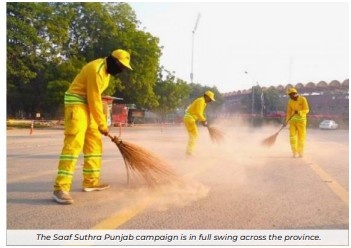
Their efforts complement larger policies by ensuring that Punjab’s towns and cities not only breathe cleaner air but also look and feel cleaner. This ground-level mobilisation is essential to sustain the broader green initiatives introduced at the provincial level.
Mehmood Booti landfill transformation
A remarkable example of Lahore’s urban renewal is the transformation of the Mehmood Booti landfill, once one of the city’s largest garbage dumps and a major source of pollution. Spread over 40 acres, the site had accumulated millions of tons of solid waste over decades, contaminating nearby land and water sources. Under the Green Punjab Initiative, it has now been reclaimed, leveled, and converted into a lush green zone with trees, walking tracks, and recreational spaces. The initiative not only restores ecological balance but also opens avenues for earning carbon credits, making it both environmentally and economically sustainable making it a model for urban renewal across Punjab.
Achievements and the road ahead
Punjab’s environmental measures represent a remarkable policy shift toward sustainable development. The government has effectively combined global partnerships, technology, institutional strengthening, and civic engagement to address complex ecological challenges.
However, the implementation stage presents opportunities for further growth. For example, sustaining the electric bike conversion programme will require investment in charging infrastructure, incentives for adoption, and active collaboration with the private sector. Similarly, while the SMART Force and EcoBot have modernised monitoring and communication in urban centres, expanding these services to rural areas will amplify their impact.
Building institutional capacity at the district and local levels is vital for sustaining these initiatives. Strengthening human resources, ensuring steady funding, and fostering accountability will elevate Punjab’s environmental programmes.
Under Chief Minister Maryam Nawaz, Punjab has emerged as a pioneer of green governance. This vision mirrors the legacy of Professor Wangari Maathai, Kenya’s first female professor and 2025 Nobel laureate, who led the Green Belt Movement to plant millions of trees and inspire global change.
The writer, who holds an M.Phil in English Literature, is an educationist, crime analyst, and youth commentator affiliated with PML-N.